Live Oak, TX roof storm preparation is worth tackling before fall storms start moving through Bexar County. With Live Oak sitting close to the I-35 corridor, strong storm cells can bring damaging winds that put loose fasteners, aging shingle seals, and other vulnerable parts of your roof to the test.
For most homes, preparing doesn’t mean replacing the entire roof. It may come down to a short list of wind-rated corrections you can address before the first major fall system rolls through. Rox Roofing’s Live Oak roofing team handles these types of pre-season roof checks.
This guide covers what can fail on a Live Oak roof in high winds, what you can check safely from the ground, and when a repair versus a full replacement may make sense.
Key Takeaways
- Most wind damage in Live Oak starts at the shingle seal strip and the fastener pattern, not the shingle material itself.
- A 6-nail fastening pattern holds up meaningfully better than the standard 4-nail pattern once sustained wind gusts pass roughly 90 mph, which South Texas storm cells regularly produce.
- Ridge caps, pipe boots, and gutter end caps fail before field shingles do in most fall wind events Rox Roofing inspects in Live Oak.
Why Does Live Oak Get Hit Harder by Fall Wind Than Nearby San Antonio Neighborhoods?
Live Oak’s mix of mature tree canopy and open corridor along I-35 creates a funnel effect during frontal storm passages. Wind that would otherwise dissipate across flatter, more open suburbs instead gets channeled between tree lines and rooflines, producing localized gusts that outpace the surrounding forecast.
The National Weather Service’s San Antonio office regularly logs wind gusts in the 60-80 mph range during fall frontal boundaries moving through Bexar County, with isolated cells producing higher localized bursts. Roofs built or re-roofed more than 10-12 years ago in this area were typically installed to the standard building code wind rating for the time. In many cases, that rating assumed lower sustained gusts than what the neighborhood now regularly sees.
The practical result: a roof that looks fine in July can have a compromised seal strip that only shows itself the first time a real wind event tests it in September or October. Nearby Universal City homes see the same funnel effect along the same corridor, so this isn’t unique to Live Oak itself.
What Actually Fails First on a Live Oak Roof in High Wind?
When strong winds hit Live Oak, roof damage doesn’t always start with the shingles themselves. Smaller, more vulnerable parts of the roofing system can begin to fail first.
Ridge Cap Shingles
Ridge cap shingles sit at the highest points of your roof, where they’re more exposed to strong winds. As the shingles age and their seal weakens, wind can get underneath the edges and cause them to lift or come loose.
Pipe Boots and Vent Flashing
The rubber collars around plumbing vents can harden and crack after years of sun and heat exposure. Once gaps develop, wind-driven rain can work its way underneath the roofing system and lead to leaks.
Gutters and Hangers
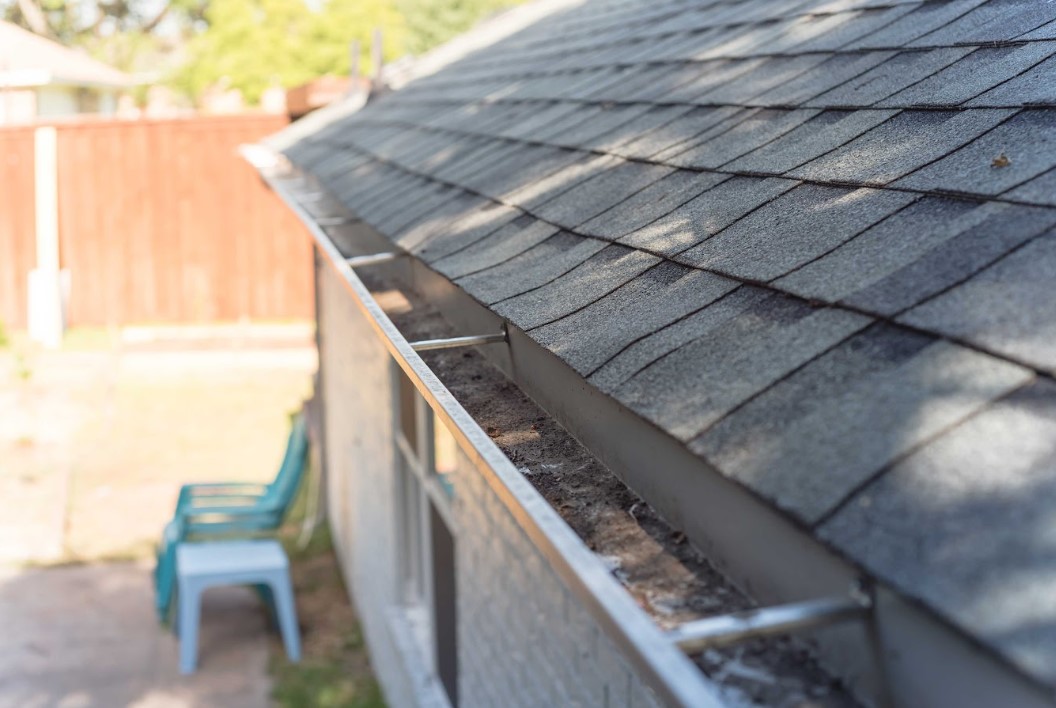
Your gutters aren’t technically part of the roof, but they can still contribute to storm damage. Loose gutters can catch strong winds and pull away from the home, potentially damaging the starter shingles along the roof’s edge.
Shingle Seal Strips
Shingles rely on adhesive seal strips to stay secured against wind uplift. Over time, heat, age, and repeated weather exposure can weaken that seal. Once it fails, individual shingle tabs may begin lifting even if the shingles themselves still appear to be in relatively good condition.
You may spot early warning signs without ever getting on your roof. From the ground, look for raised or uneven shingles, sagging gutters, loose roof edges, or visible cracks around pipe boots and vents. If something looks out of place, having it inspected before storm season can help catch a smaller problem before it becomes a larger repair.
How Does a 6-Nail Fastening Pattern Actually Help in Live Oak’s Wind Conditions?
Standard asphalt shingle installation uses four nails per shingle, placed in the manufacturer’s designated nailing zone. Most manufacturers, including Owens Corning, publish a six-nail pattern specifically for higher wind zones, adding two additional fasteners near the outer edges of each shingle.
The difference isn’t cosmetic. Independent wind-uplift testing (ASTM D3161 and D7158, the two standards manufacturers cite for wind ratings) shows a measurable increase in uplift resistance when the additional two nails are placed correctly. That’s because they hold down exactly the section of shingle most likely to catch wind and peel.
For a re-roof in Live Oak, asking specifically for the six-nail pattern costs very little in labor time relative to the whole project. It’s the single change most likely to keep a roof intact through a fall wind event that would otherwise start peeling a standard-pattern roof at the eaves.
What Should a Live Oak Homeowner Check Before September Storms Arrive?
A homeowner can safely do a ground-level check in about 15 minutes:
- Walk the perimeter of the house and look up at the roofline. Look for any shingle tabs that appear lifted, curled, or a different color than the surrounding shingles (a sign of granule loss).
- Check gutters for visible sagging, separated seams, or hangers pulling away from the fascia board.
- Look at any visible pipe boots or vent stacks for cracking around the rubber collar.
- Check the attic (if accessible) for any visible daylight around vent penetrations or water staining on the underside of the decking, which indicates an existing small leak.
- Note the roof’s approximate age. Anything installed before 2014 is a strong candidate for a professional wind-readiness inspection before it’s tested by a real storm.
Anything beyond a visual ground check, especially getting on the roof itself, should go to a licensed roofing contractor. A misstep on a steep or wet roof causes more injuries every year than most homeowners expect, and a trained inspector can spot early sealant failure that isn’t visible from the ground at all.
Repair or Replace: What’s the Right Call for a Live Oak Roof Before Fall?
Most Live Oak homes Rox Roofing inspects before storm season fall into one of three categories:
Isolated fastener or sealant issues on a roof under 12 years old: a targeted repair, typically re-securing ridge caps, replacing a pipe boot, or resealing a handful of shingle tabs.
Widespread granule loss or multiple failed seal strips on an older roof: a full tear-off and replacement is usually the more cost-effective long-term move. Repeated spot repairs on an aging roof rarely hold through a second or third storm season.
A roof with existing hail history or a prior insurance claim on file: worth a documented inspection either way. A fresh wind event layered on top of undocumented hail damage can complicate a future claim. Our storm damage restoration team in Live Oak handles exactly this kind of layered-damage case.
Rox Roofing’s inspectors walk a homeowner through exactly which category their roof falls into, with photo documentation of anything found, before recommending either path.
What Should a Live Oak Homeowner Expect from a Pre-Storm Inspection?
A Rox Roofing inspection in Live Oak follows the same process whether the home is 5 years old or 25. The technician walks the full roofline, checks the fastening pattern at the ridge and eaves, inspects every visible penetration (pipe boots, vent stacks, chimney flashing if present), and photographs anything found using CompanyCam. That way, the homeowner has a dated, timestamped record even before any repair work happens.
If the inspection turns up nothing urgent, the homeowner gets a written report confirming the roof’s current condition. That report is useful documentation to keep on file if a storm causes damage later in the season. If it turns up an early-stage issue like a lifted ridge cap or a cracking pipe boot, we quote it separately as a standalone repair. There’s no pressure to bundle it into a larger project the roof doesn’t actually need yet.
For homes with a roof older than 15 years or any prior wind or hail claim on file, Rox Roofing also flags whether a full inspection by a licensed engineer might be worth requesting. That’s particularly true if the home is being considered for an insurance renewal review or a pre-sale inspection.