Commercial roof maintenance San Antonio fall planning should start before heavy rain puts your roofing system to the test. On flat and low-slope commercial roofs, small issues around drains, seams, flashing, and other vulnerable areas can allow water to get into the roofing system when storms arrive.
Taking care of these issues ahead of time can help property owners reduce the risk of leaks, water damage, and unexpected repairs. A fall roof inspection can also identify minor problems while they’re still easier to address.
This checklist follows many of the same areas Rox Roofing evaluates when inspecting commercial roofing systems in San Antonio. We’ll cover what to check on TPO, PVC, and modified bitumen roofs, why each area matters, and what to do when an inspection uncovers a problem.
Key Takeaways
- Roof drains and scuppers cause more commercial roof leaks in San Antonio than membrane failure does, and they’re the fastest, cheapest thing to check.
- TPO seam integrity should be checked annually. A seam that’s held for years can still fail after enough UV and thermal cycling, and it usually fails quietly until a storm forces water through it.
- Ponding water that sits for more than 48 hours after a rain event accelerates membrane breakdown and should be flagged, not ignored.
- A documented fall inspection gives a property owner a dated record of roof condition heading into the season with the highest rainfall volume in the local calendar.
Why Does Fall Storm Season Matter More for Flat Commercial Roofs Than Pitched Residential Ones?
A pitched residential roof sheds water by design. A flat or low-slope commercial roof relies entirely on drains, scuppers, and a properly sloped membrane to move water off before it finds a way in. San Antonio’s fall storm pattern regularly delivers heavy rainfall in a short window, during frontal passages and the tail end of Gulf tropical systems. When that happens, any existing drainage weakness gets exposed immediately instead of gradually.
Commercial property owners often don’t find out about a slow membrane or seam issue until water is already visible on an interior ceiling tile. At that point, the repair scope and cost are both larger than they would have been with an earlier catch. A fall maintenance check is specifically timed to catch these issues before the season’s heaviest rain events, not after.
What Should Be Checked on a TPO or PVC Roof Before Fall?
A proper pre-season commercial roof check covers four areas in order of how often they actually cause leaks:
- Drains and scuppers: debris, roofing granules, and vegetation growth are the single most common cause of ponding on a flat roof. A blocked drain turns a normal rain event into standing water that sits against the membrane for days.
- Seam integrity: TPO and PVC membranes are heat-welded at the seams, and while a properly installed seam can last the life of the roof, thermal cycling and age can open a seam edge enough to let water track underneath during wind-driven rain. Our TPO roofing system page covers how these seams are installed in more detail.
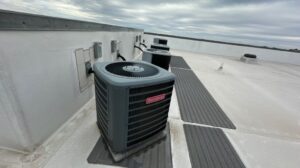
- Flashing at penetrations and walls: HVAC curbs, pipe penetrations, and roof-to-wall transitions are where most commercial roof leaks originate, because these are the points where the membrane has to be mechanically fastened and sealed rather than simply run flat.
- Membrane surface condition: general wear, punctures from foot traffic or dropped tools, and any visible blistering or delamination.
How Much Ponding Water Is Actually a Problem?
Some ponding after a heavy rain event is normal on almost any flat roof and clears within a day. The concern threshold is water that’s still standing 48 hours after the rain has stopped. Standing water that sits that long accelerates UV breakdown at the membrane surface even under a reflective TPO cap, adds unplanned structural load, and creates a magnet for debris that can clog nearby drains.
Persistent ponding usually traces back to one of three causes: a low spot in the original roof deck, a drain that’s slightly too high relative to the surrounding membrane, or insulation that’s settled unevenly over time. Each has a different fix, ranging from a simple drain adjustment to a tapered insulation crickets solution, and an inspection is the only way to know which applies before committing to a repair scope. Our commercial flat roofing guide for San Antonio walks through each of these fixes in more depth.
What Does a Fall Commercial Roof Inspection From Rox Roofing Actually Cover?
Rox Roofing’s commercial inspections for San Antonio properties walk the full roof surface and document, with dated photos, the condition of every drain, scupper, seam run, and penetration point. The report identifies anything that needs immediate attention versus anything worth monitoring through the season, so a property owner isn’t pressured into unnecessary work on a system that’s otherwise performing fine.
For properties on a maintenance plan, this fall check is typically paired with basic housekeeping items, like clearing debris from drains and resealing minor pitch pockets. These prevent small issues from becoming leak calls once the season’s first major storm arrives.
When Does a Repair Make More Sense Than a Full Recover or Replacement?
Most commercial roofs Rox Roofing inspects in San Antonio fall into one of three categories heading into fall:
- A roof under 10 years old with isolated seam or flashing issues: targeted repair, typically limited to the specific run of seam or the specific penetration detail that’s showing wear. This is the most common outcome of a fall inspection and usually the least expensive path.
- A roof between 10 and 15 years old with multiple areas of wear but no widespread membrane failure: often a good candidate for a restorative coating or a partial recover. That option can extend service life several more years without the cost or disruption of a full tear-off.
- A roof over 15-20 years old with widespread membrane degradation, multiple ponding areas, or a documented history of repeat leak calls: this needs a different approach. It’s usually more cost-effective to plan a full replacement on a predictable timeline than to keep funding piecemeal repairs on a system that’s genuinely at the end of its service life.
Rox Roofing walks property owners and facility managers through exactly which category a roof falls into based on the inspection findings, with clear next-step options rather than a single hard sell.
What Roofing Systems Does This Apply To?
Commercial buildings in San Antonio use several types of flat and low-slope roofing systems. While many fall maintenance tasks apply to any commercial roof, the areas that need the most attention depend on the roofing material.
TPO (Thermoplastic Polyolefin)
TPO is a popular choice for commercial roofs because of its reflective surface and heat-welded seams. During an inspection, particular attention should be paid to seams, flashing, penetrations, and areas where the membrane may have become loose or damaged.
PVC
PVC roofing is similar to TPO in appearance and installation, but it also offers strong resistance to chemicals, oils, and grease. This can make it a good option for restaurants and other commercial properties with rooftop exhaust systems. Maintenance should include checking seams, flashing, penetrations, and the overall condition of the membrane.
Modified Bitumen and Built-Up Roofing (BUR)
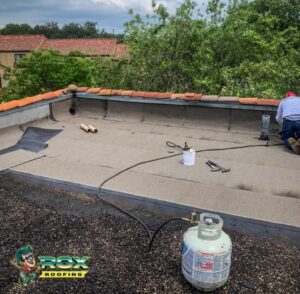
Modified bitumen and built-up roofing systems require a slightly different approach. Instead of focusing primarily on heat-welded seams, an inspection should look for cracked or deteriorating surfaces, damaged flashing, open laps, blisters, and other signs of wear that could allow water into the roofing system.
Fluid-Applied Roof Coatings
Commercial roofs with a fluid-applied coating should be inspected for cracks, peeling, worn areas, and other signs that the coating has deteriorated. Because coatings gradually wear over time, some roofs may eventually need another coat to maintain proper coverage and protection.
Knowing which roofing system you have is an important first step in developing the right maintenance plan. Rox Roofing can identify the roof type, evaluate its current condition, and focus the inspection on the areas most likely to need attention for that particular system.